How to Create a Meditation Corner at Home
How to create a meditation corner at home in any size of room: choosing the spot, a seat, light, sound and a few personal objects, plus small-space ideas.
- Duration
- 4 min
- On the menu
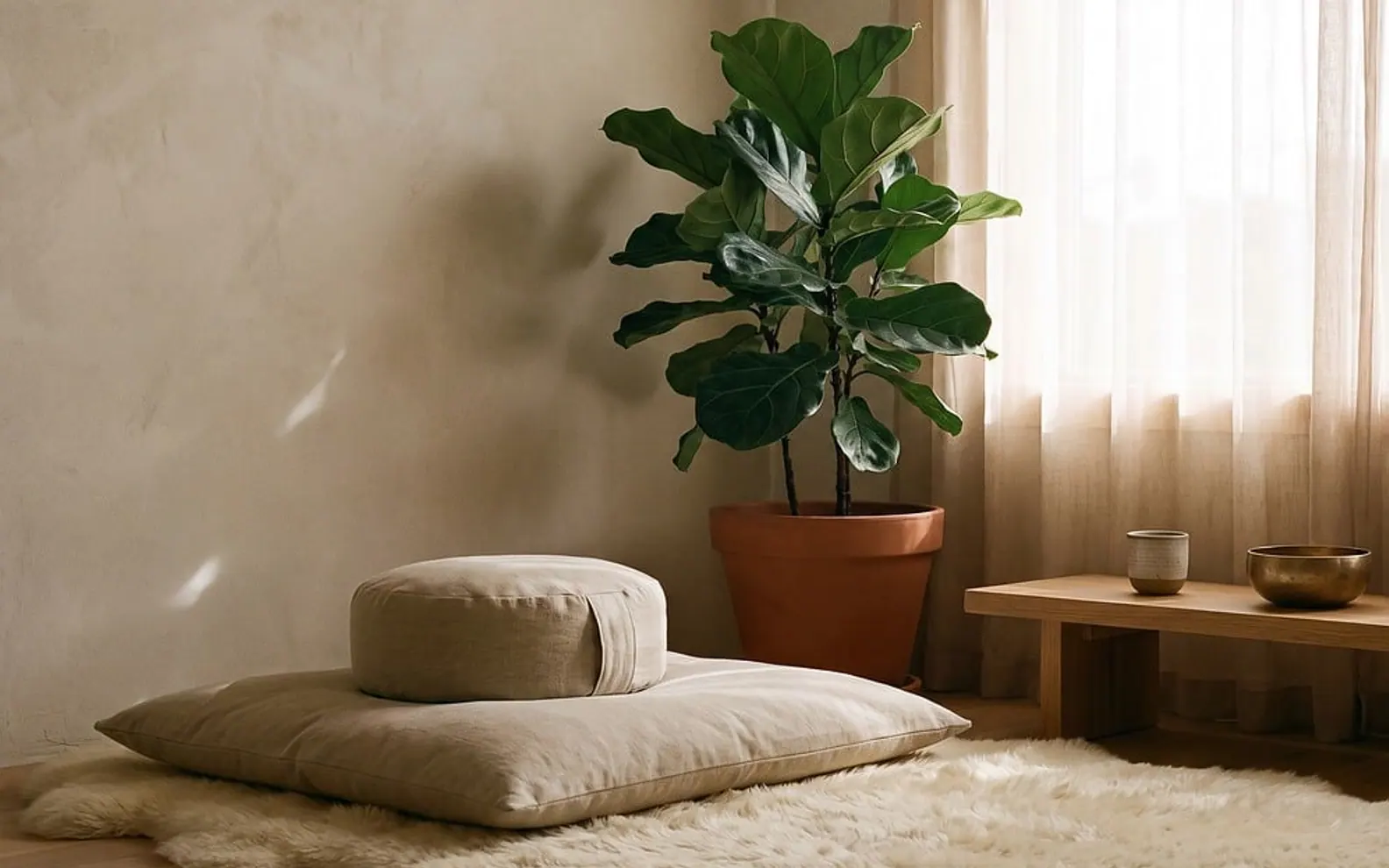
A meditation corner needs only three things: a reasonably quiet spot, something comfortable to sit on and as little clutter as possible. Everything else, from plants to candles, is optional. The real purpose of the space is practical rather than decorative. When the same corner is always ready, there is one less decision standing between you and sitting down.
Step one: choose the spot
Walk around your home at the time of day you are most likely to practise and notice where it feels calmest. Useful questions:
- Is it out of the main traffic? A corner of the bedroom or a landing is often better than the living room, where people pass through.
- What is the light like? Soft daylight from a window is lovely in the morning; in the evening you will want a lamp you can dim.
- How noisy is it? Some sound is fine, but a spot next to the washing machine or a busy road will test anyone.
- Can it stay set up? A space you have to rebuild every day tends to be abandoned.
The spot does not need to be a whole room. A metre or so of floor beside a wall is plenty.
Step two: clear it
Remove anything that pulls attention towards chores: laundry, paperwork, chargers, the exercise bike you feel guilty about. A plain wall in front of you is restful. If you cannot clear the view, sit facing a window or turn your seat so the mess is behind you.
Step three: add a seat
Choose your seat according to how you like to sit. A firm cushion or a folded blanket suits cross-legged sitting; a low kneeling bench helps if your back prefers to stay upright; a simple upright chair is perfectly fine and often the most comfortable choice. Our guide to meditation positions explains which seat works with which posture. A small rug or mat beneath adds warmth on hard floors.
Step four: light, warmth and sound
A lamp with a warm bulb is gentler than an overhead light. Keep a soft throw nearby, because the body cools when it is still. For sound, silence is ideal, but a small fan or a white-noise app can mask an irregular racket such as traffic or a neighbour's music. If you like to begin and end with a chime, a little bell or singing bowl can live in the corner too.
Step five: a few meaningful objects
This is where the space becomes yours. Keep it to a handful of things so the corner stays calm:
- A plant, ideally an easy one that tolerates the light you have.
- A stone, shell or piece of wood picked up on a walk.
- A photograph or card that reminds you why you practise.
- A notebook and pen for anything that keeps nagging during a sit.
- A candle, if you like one, kept well away from fabrics and never left burning unattended.
What is worth buying, and what is not
| Essential | Pleasant extra | Easy to skip |
|---|---|---|
| A seat that suits your body | A dimmable warm lamp | Specialist "meditation" furniture |
| A blanket or throw | A plant or natural object | Elaborate altars or statues |
| A simple timer | A small bell or bowl | Gadgets that track your "calm" |
A calm, uncluttered home is often what people mean when they talk about a "zen" interior, but the effect comes from subtraction rather than shopping. Most people already own everything their corner needs.
Ideas for small or shared homes
- The end of the bed. Fold a blanket at the foot of the bed and sit on it facing the wall.
- A basket kit. Keep a cushion, blanket and bell in a basket and set them out in the same place each time.
- A windowsill. A wide sill with a cushion can double as a morning seat.
- A folding screen or curtain. Useful in a studio flat to mark the space visually.
- A "do not disturb" signal. Agree with housemates or family that a closed door or a particular object on the handle means ten quiet minutes.
Children and pets may well wander in. Many people simply let them sit nearby; a curious child copying a few breaths is not a bad outcome.
Keeping the corner alive
A space only works if it is used. Link it to a regular moment, such as straight after making the first cup of tea, so that a short morning meditation becomes routine. Dust it once a week, refresh the objects now and then, and resist piling things on it during busy weeks. If you are still learning the basics, the beginner's guide to meditation covers what to do once you sit down.
Does the corner have to face a particular direction?
No. Some traditions have preferences, but for home practice the best direction is the one that feels least distracting.
Can I use the same corner for reading or stretching?
Yes. A calm corner used for several quiet activities still signals rest. Just avoid working, scrolling or eating there, so it keeps its gentle associations.