How to Make Bath Salts at Home
A simple bath salt recipe with Epsom and sea salt, optional oils and dried flowers, how Epsom differs from bath salts, safe scent tips, storage and gifting.
- Duration
- 4 min
- On the menu
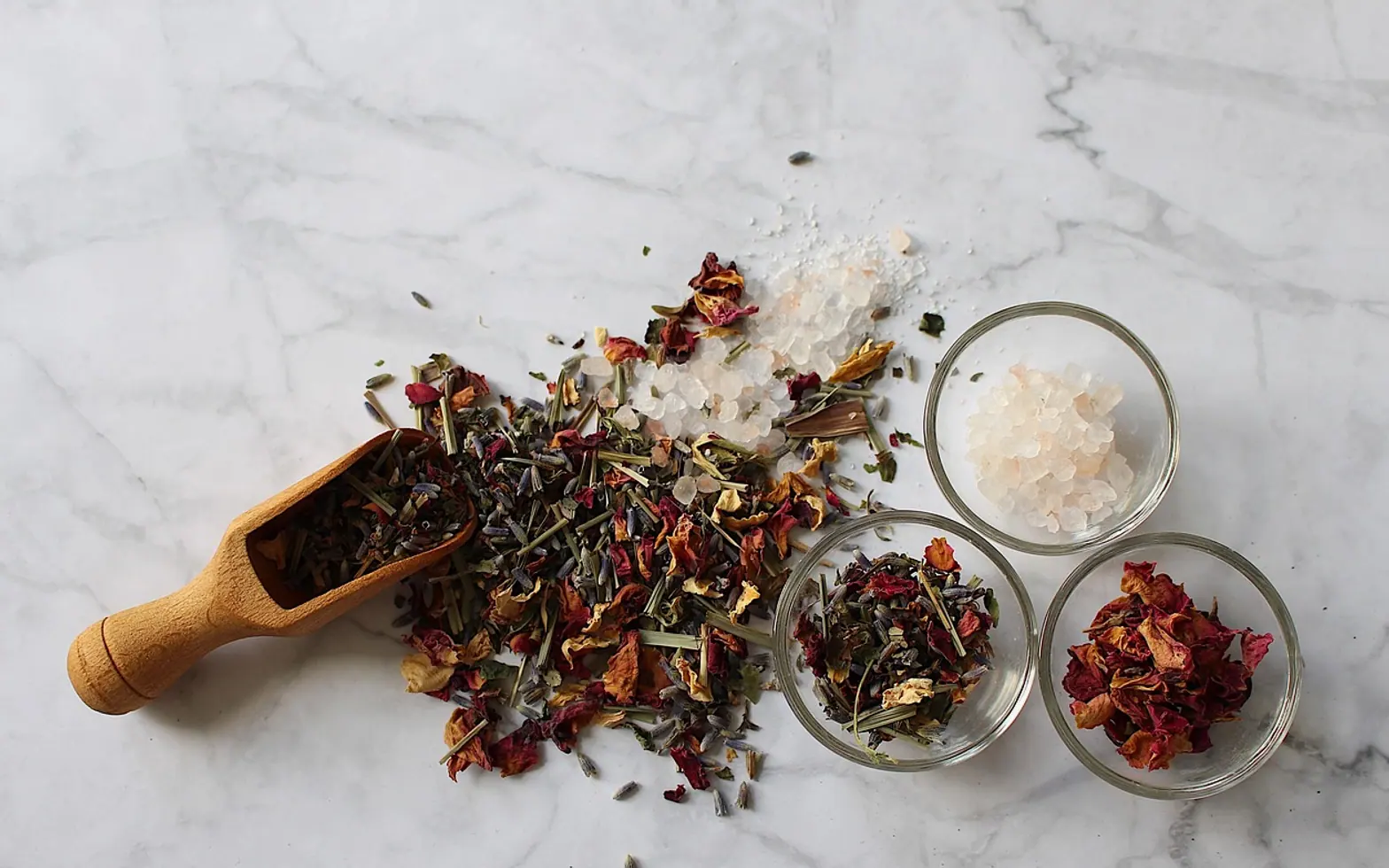
Homemade bath salts take about ten minutes: mix coarse salt (Epsom salt, sea salt or a blend of both) with an optional spoonful of baking soda, a little carrier oil and a few drops of essential oil or some dried herbs, then store the mixture in a clean, airtight jar. Scoop a handful or two into warm running water when you want a soak. The recipe is forgiving, cheap and easy to tailor to your skin and your mood.
Epsom salt vs bath salt: what is the difference?
Epsom salt is one specific compound, magnesium sulfate. "Bath salts" is a looser term for any blend of salts made for the tub, which might include sea salt, Himalayan pink salt, Dead Sea salt, Epsom salt or a mix. Shop-bought bath salts are often Epsom or sea salt with fragrance and colouring added. Making your own lets you choose exactly what goes in, and leave out what your skin dislikes. Our guide to taking an Epsom salt bath explains how to use the plain crystals on their own.
Ingredients and what each one adds
| Ingredient | Role | Notes |
|---|---|---|
| Epsom salt | Main base; dissolves easily | Unscented versions give you a clean start |
| Coarse sea salt | Texture and a mineral feel | Larger crystals dissolve more slowly |
| Baking soda | Softens the feel of the water | A spoonful is enough |
| Carrier oil (sweet almond, sunflower, jojoba) | Helps disperse scent; feels nourishing | Use sparingly: oil makes tubs slippery |
| Essential oil | Scent | A few drops only; see safety notes below |
| Dried flowers or herbs | Look and gentle aroma | Lavender, chamomile, rose petals, calendula |
A basic bath salt recipe
Using "parts" means you can scale it to any jar. A cup works well as one part for a medium batch.
- In a dry bowl, combine two parts Epsom salt and one part coarse sea salt.
- Stir in a small spoonful of baking soda if you like softer-feeling water.
- In a separate small dish, mix a teaspoon or so of carrier oil with a few drops of essential oil. Blending the scent into oil first spreads it more evenly.
- Drizzle the oil over the salts and stir thoroughly with a dry spoon until no clumps remain.
- Fold in a small handful of dried flowers, if using.
- Spread the mix on a tray for an hour to let any moisture settle, then spoon it into a clean, completely dry jar and seal.
To use, add one or two handfuls under the running tap and swirl before getting in. The ideas in our guide to a truly relaxing bath will help you make the most of it.
Variations to try
- Evening blend: Epsom and sea salt with lavender buds and a couple of drops of lavender oil.
- Fresh morning blend: sea salt with a little dried mint or rosemary. Citrus oils smell bright but can irritate some skin, so test a tiny amount first.
- Sensitive-skin blend: unscented Epsom salt, a spoonful of baking soda and finely ground oats. No essential oils at all.
- Floral jar: rose petals and calendula with a neutral oil. Pretty for gifts.
Scent and skin safety
Essential oils are concentrated, and more is not better. Keep these points in mind:
- Never drip essential oil directly onto the bathwater; it floats on top and can sting the skin. Always mix it into the salt or a carrier oil first.
- Avoid oils that commonly irritate, such as cinnamon, clove, oregano and large amounts of peppermint.
- Patch test a little of the dissolved mix on your inner arm the first time.
- Leave essential oils out of salts meant for babies or young children, and check with a doctor or midwife during pregnancy.
- Some essential oils are harmful to pets, cats in particular, so store jars out of their reach and keep the bathroom door closed while scented water cools.
Mistakes to avoid
- Too much oil. It leaves the tub slick and dangerous to stand in.
- Food colouring. It can stain grout, towels and skin.
- Glitter. It clogs drains and lingers everywhere.
- Loose petals in a shared drain. Use a muslin bag or a drain strainer if you add lots of plant material.
- Wet spoons in the jar. Moisture makes the salts clump and can spoil herbs.
Storing and gifting
Keep the jar sealed, away from steam and direct sun. A homemade blend is best used within a few months, while the scent is fresh. If you are giving it away, add a small label listing every ingredient, so anyone with allergies or sensitive skin can decide whether it suits them, plus a note such as "one handful per bath". Paired with a face mask and a soft flannel, it makes a simple evening kit, especially alongside the routine in our guide to doing a facial at home.
Can I make bath bombs the same way?
Not quite. Bath bombs rely on baking soda and citric acid, which fizz when wet, pressed into moulds with a binder. Bath salts are simpler and do not need to set.