What Is a Sound Bath, and What Happens During One?
What a sound bath is, the singing bowls and gongs involved, what a session feels like, what is and is not known about it, and how to try a bowl at home.
- Duration
- 4 min
- On the menu
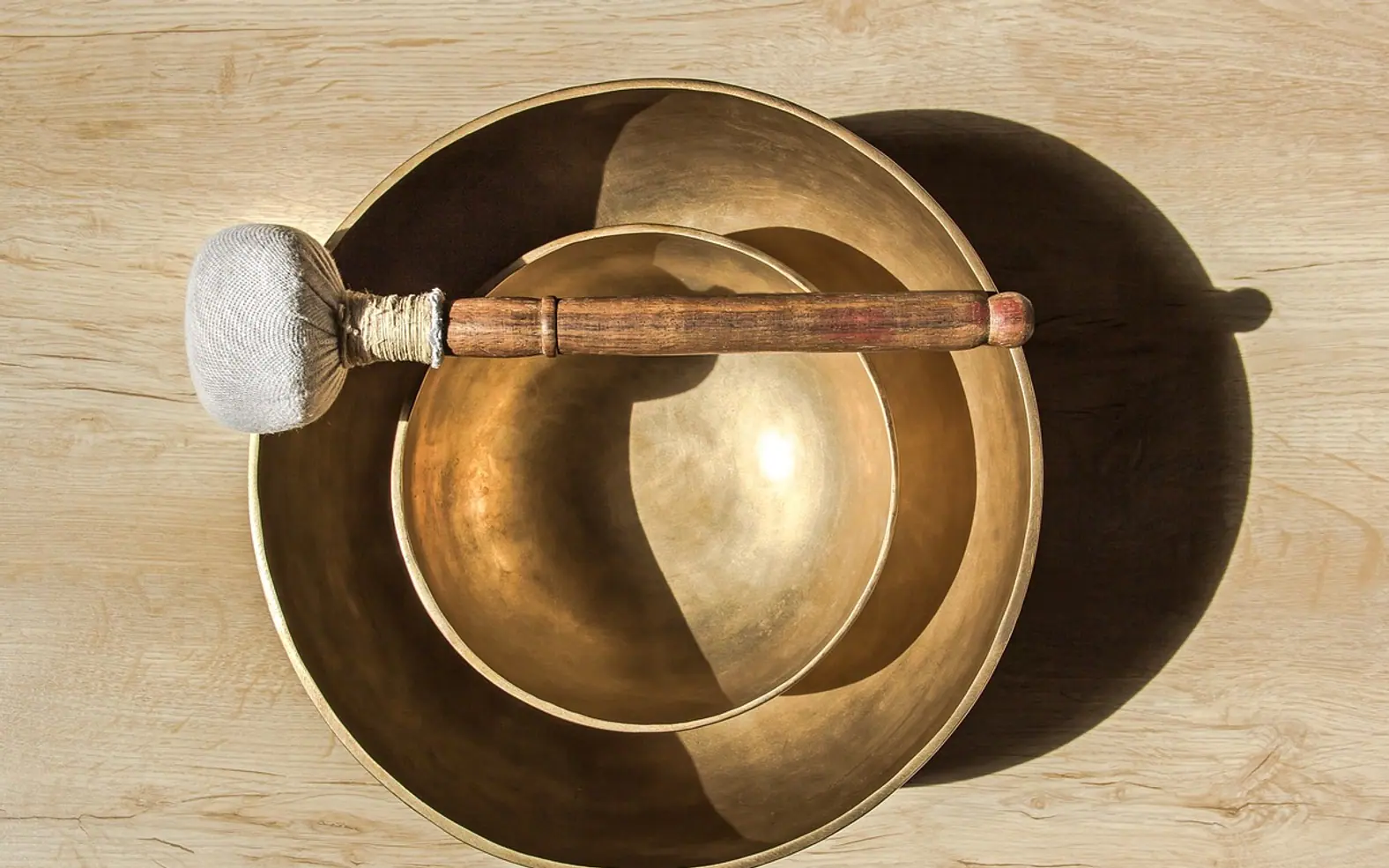
A sound bath is a listening meditation in which you lie or sit comfortably while someone plays resonant instruments, most often singing bowls and gongs, so that the tones wash over you. Despite the name, no water is involved: the "bath" is in sound. Your only job is to listen, letting the shifting tones become the anchor for your attention instead of your breath or your thoughts.
The instruments you are likely to hear
- Metal singing bowls. Struck gently or rubbed around the rim with a wooden mallet, they produce a rich, layered hum that lingers.
- Crystal bowls. Made from quartz glass, they give a purer, often louder and more sustained tone.
- Gongs. Large hanging discs that can move from a soft shimmer to a powerful roar depending on how they are played.
- Chimes, bells and tingsha. Small cymbals or bells used to open or close a session.
- Drums, rain sticks and ocean drums. Used by some facilitators for rhythm or texture.
- Tuning forks and voice. Occasionally included, either held near the body or as gentle humming.
What a session usually looks like
Group sound baths are often held in yoga studios, wellness centres and spa relaxation rooms, and sessions commonly run from around half an hour to an hour. You arrive, settle onto a mat with a pillow and blanket, and perhaps an eye mask. The facilitator may say a few words about breathing or intention, then begins to play. Instruments are layered in and out, sometimes quietly, sometimes building to a fuller sound, before fading into silence at the end. You are usually invited to lie still for a minute or two afterwards and to get up slowly.
There is nothing to perform. Some people drift close to sleep. Some see vivid images or memories. Some feel restless at first and then settle. Occasionally someone becomes emotional, which is not unusual and passes.
Why people go
For many, the appeal is how effortless it feels compared with silent meditation. Sound gives the mind something interesting to follow, so it is easier to stop rehearsing the day. Others enjoy the communal stillness, or simply the chance to lie down in a warm, dim room with nothing asked of them. In that sense it sits close to other types of meditation that use an external anchor.
What is and is not known
Research on sound baths and singing bowl meditation is still limited, and it is fair to describe the practice as a relaxing experience rather than a therapy. Claims you may come across about particular frequencies repairing organs, "re-tuning" cells or clearing energy blockages go well beyond what has been shown. Enjoy a sound bath for what it reliably offers, which is a calm, absorbing hour, and keep any health concerns for a doctor.
Who should check first
Most people can join comfortably, but a few situations call for a word with the facilitator, and sometimes your doctor, beforehand:
- Tinnitus, hyperacusis or other hearing sensitivity, since gongs in particular can be loud.
- Pregnancy, especially if bowls might be placed on or near the body.
- A history of seizures, or conditions where intense sensory input is unsettling.
- Recent trauma, if lying still in a dark room with strangers feels unsafe. Keeping your eyes open or sitting near the door is fine.
Earplugs are allowed. You can also move your mat further from the instruments.
Trying a singing bowl at home
You do not need a full set to explore the idea. One bowl and a quiet room are enough:
- Rest the bowl on the flat palm of one hand or on a small cushion, so nothing dampens its sides.
- Strike the outer rim softly with the padded end of the mallet and simply listen until the sound disappears completely.
- To make it "sing", press the wooden side of the mallet against the outer rim and circle slowly and evenly, keeping steady pressure. The tone builds gradually.
- Try a five-minute sit: strike once, listen to the fade, wait a few breaths in silence, then strike again.
A home sound session fits beautifully into an evening routine, before or after a long, unhurried bath in a dimly lit room.
Sound bath compared with other quiet practices
| Practice | Anchor | Effort needed |
|---|---|---|
| Sound bath | Instrument tones | Low: lie down and listen |
| Breath meditation | Sensation of breathing | Moderate: return attention yourself |
| Body scan | Sensations region by region | Moderate |
| Guided recording | A voice giving instructions | Low to moderate |
Small etiquette points
What should I wear?
Soft, warm clothes and socks. Rooms cool down when everyone is still.
Is it rude to fall asleep?
Not at all, though gentle snoring may earn a nudge in a group.
Can I bring my own blanket?
Usually, yes, and many regulars do. If quiet listening appeals but evenings are your hardest time, the ideas in our guide to relaxing before bed can be combined with a short bowl practice.